

Smart manufacturing is an approach to production management that uses data, connected systems, and analytical capabilities to coordinate facilities, people, and resources, adapting on-site operations to real-time conditions. Its architecture must determine where to process information, how quickly to make decisions, and which activities to keep running when a component becomes unavailable.
It is a well-known fact that different timeframes coexist in a factory. Machine control must adhere to the constraints of the physical process; production line management coordinates operations and materials; and planning evaluates capacity and delivery schedules over longer time horizons. A correct decision, if made too late, may lose its value. On the other hand, replanning too frequently can destabilize the department’s operations.
Consequently, to design a smart factory, it is necessary to allocate functions and responsibilities in accordance with these timeframes. The selection of software involves decisions regarding local autonomy, technological dependencies, the quality of forecasts, and methods of intervention.
Smart Manufacturing, Automation, and Industry 4.0: What Are the Main Differences?
Automation governs the execution of tasks; smart manufacturing coordinates the decisions that determine how to use production resources. The function of automatic control is to keep a parameter within the specified limits.
Intelligent management, for its part, takes this concept a step further: it also assesses whether those conditions are appropriate in terms of quality, equipment availability, and the production schedule.
Industry 4.0 refers to the paradigm based on interconnectivity, cyber-physical systems, and the digital integration of the value chain. Smart manufacturing builds on this by developing its operational dimension through the combination of technologies and management practices.
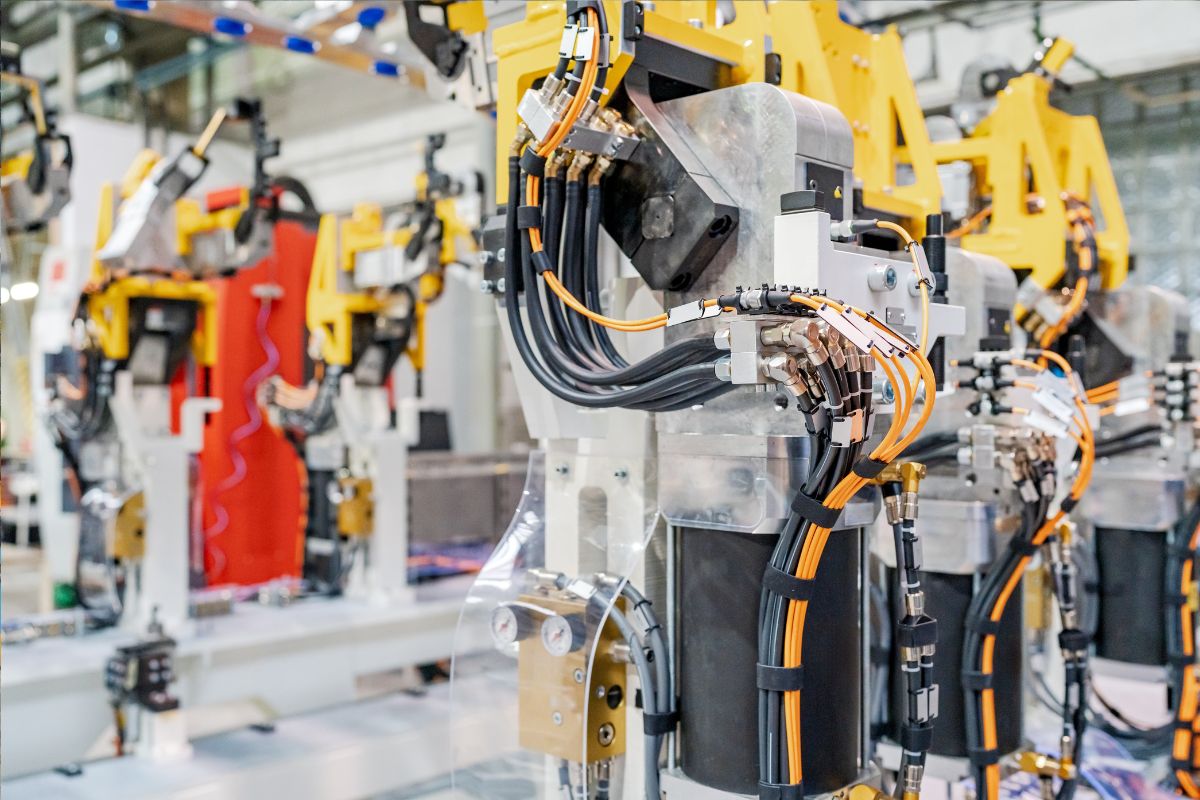
The evolution of the smart factory thus broadens the scope of optimization: from machine performance to the output of the production system. Increasing the speed of a resource can disrupt the flow if it creates backlogs at the bottleneck. Data-driven operations must recognize this relationship and assess the effects of decisions on the entire process.
Smart Factory: What the Research Says
The Global Lighthouse Network report¹, published by the World Economic Forum on January 15, 2026, describes a network of 223 sites across more than 30 countries and 40 industrial sectors. It identifies operational resilience, the adoption of AI, and the scaling of solutions beyond pilot projects as key themes. The scope includes organizations selected for their performance: these figures document advanced practices, without measuring the average maturity of the manufacturing sector.
One design implication is that the local results must be maintainable as the number of lines, users, and dependencies increases. An application that works effectively on a single machine requires further testing before it can become a service shared across multiple facilities: processing capacity, site autonomy, and the comparability of results are all factors considered in the architectural evaluation.
ERP, MES, SCADA, and Data Platforms: A Guide to Their Functions
Smart manufacturing architecture combines systems with complementary roles. The following table summarizes the functions to be covered; some products may include several of these, and their distribution must be determined based on the industrial context.
| Component | Function in the production system |
|---|---|
| ERP | Manage orders, materials, availability, and financial processes |
| APS, Advanced Planning and Scheduling | Develop plans and sequences while taking into account configured capacities and constraints |
| MES, Manufacturing Execution System | Coordinate and track the execution of manufacturing processes |
| SCADA, Supervisory Control and Data Acquisition | Monitoring systems, collecting measurements, and managing alarms |
| Industrial IoT | Connecting assets and making telemetry and events available |
| Data Platform | Organize historical and current data to enable consistent analysis across processes and facilities |
| Analytics and AI | Identify leaks and anomalies, make predictions, and evaluate alternatives |
The ISA-95² standard provides a framework for distinguishing between activities and functional boundaries. The model remains applicable even when information flows are distributed: the functional hierarchy helps describe responsibilities without imposing a specific technology.
We have already discussed the relationship between management and execution in the article “MES and SAP: Integration Models, Benefits, and Key Elements.” In the context of smart manufacturing, the next decision concerns where to locate operational capabilities and what dependencies to establish.
Distribute functions among the plant, the facility, and central systems
The distribution of functions across the production architecture depends on latency, data availability, operational continuity, and the required degree of autonomy. Distinguishing between the plant level, facility level, and central systems allows for the assignment of processing and responsibilities to the most appropriate level, balancing timeliness, coordination, and governance capabilities.
Near the facilities: monitoring and timely analysis
Functions that require specific response times must be executed on infrastructure suited to the process. PLCs and controllers retain control responsibilities; edge computing adds local processing, such as signal filtering and inference on images or vibrations.
Let’s consider, as a design example, a visual inspection that must classify the part before it reaches the rejection station. The requirement must be measured from the moment of acquisition to execution: image transfer, processing, communication, and mechanical response all contribute to the available time. The speed of the AI model alone is not enough to qualify the solution.
Processing data locally reduces certain network dependencies, but requires version management, monitoring, and device maintenance. The edge is an architectural choice with its own operational costs.
At the plant level: coordinating resources and work
Line coordination must be aware of executable orders, operator availability, and the status of resources and materials. The relevant functions can be distributed among the MES, department-level applications, and local or remote services: what matters is verifying which dependencies are compatible with the required continuity.
A workstation may already have a downloaded instruction but still require a central service to authorize the next processing step. Autonomy must therefore be evaluated on a task-by-task basis, taking into account operator access, recipes, quality controls, and traceability.
In central systems: compare, simulate, and manage
Central platforms or cloud-based systems can aggregate historical data, compare facilities, and support model training and simulations. The unified view makes it possible to identify systematic differences between plants, provided that indicators and production conditions are comparable.
The choice must balance uniformity with local specifics. A common definition of a shutdown facilitates comparison; the details of the causes, however, may depend on the line’s technology. Centralizing the analysis requires preserving these differences to avoid comparing values that describe different phenomena.
APS and Planning: Responsiveness Without Instability
Intelligent planning must respond to changes that affect the feasibility of the schedule while maintaining sufficient stability for execution. An APS uses capacity, calendars, setup times, and material constraints to propose feasible sequences.
The update frequency should be proportional to the impact of the event. A brief slowdown can be absorbed; a prolonged outage or a blocked batch may require a new sequence. Thresholds and planning horizons help distinguish between these cases.
In some production processes, it is useful to protect upcoming activities through a “frozen” horizon, which can be modified only under defined conditions. Changing an order that has already been prepared may involve moving materials, changing tools, and losing the setup work that has already been done.
The comparison of scenarios must include these costs. Improving the on-time delivery of an urgent order may reduce overall efficiency; fully utilizing every resource may increase work in progress. The APS configuration makes the priorities between service, productivity, and department stability explicit.
AI, Analytics, and Digital Twins: Choosing Precision and Timeliness
AI, analytics, and Digital Twins transform industrial data into signals, forecasts, and simulations to support decision-making. Their effectiveness depends on the ability to balance accuracy, response times, processing costs, and operational reliability with respect to the specific use case.
Real-Time Analytics and Decision-Making Reliability
The Industrial IoT feeds analytics with measurements of operating conditions. The frequency of data acquisition and storage must be tailored to the phenomenon: an average may describe consumption, but it can hide a peak that is useful for identifying an anomaly.
For AI, the compromise also involves errors. In quality control, increasing sensitivity can lead to more false alarms; in maintenance, too many alarms can overwhelm the capacity for verification. The assessment must take into account undetected defects, false positives, available time, and the consequences of intervention.
Defect detection and predictive maintenance also require re-evaluation when materials, products, or environmental conditions change. The accuracy measured during validation must remain adequate throughout the system’s operational life.
Digital Twin: Level of Detail Tailored to the Decision
A Digital Twin links a digital representation to a real-world asset or process, with updates tailored to the application. It can be used to compare alternative capabilities, process changes, or production sequences. The research by Shao and Helu³ published by NIST emphasizes the need to develop Digital Twins for specific use cases and to promote reusable components.
The model needed to study queues and setups is different from the one used to simulate the thermal behavior of a component. Greater detail requires more data, computation, and maintenance. It must be justified by the decision that leads to improvement.
It is necessary to verify the discrepancies between the simulation and the observed results, identifying the conditions under which the model is reliable. A change to the production line may render certain assumptions obsolete: the cost of updating the digital twin is part of its operational sustainability.
GenAI as a Tool for Technical Knowledge
GenAI can speed up the review of procedures and technical reports. Within the production architecture, its role must be distinguished from that of control systems and predictive models: it helps interpret documents and formulate proposals. Subsequent actions must comply with process authorizations and verifications, while ensuring that the sources used remain identifiable.
Business Continuity: Planning for Disconnection, Too
A resilient architecture defines which activities continue, for how long, and under what constraints when a service becomes unavailable. The presence of edge components alone does not guarantee operational autonomy.
During a loss of connectivity, for example, it may be possible to complete an order that has already been issued, while initiating a new production run requires information that is not available locally. The behavior must be defined in terms of quality, safety, and traceability, with explicit conditions for suspending the activity.
The test must include local storage capacity, the availability of instructions, and data recovery during restoration. It is also necessary to test less obvious dependencies, such as authentication, network services, and access to updated specifications.
The separation of analytical services from control, segmentation, and recovery procedures help limit the impact of a failure. Resilience is measured by the remaining available computing capacity, as well as by the status of individual servers.
Linking Architectural Choices to Industrial Benefits
Operational efficiency increases when coordination reduces wait times and backlogs at production bottlenecks. The result should be assessed in terms of net output and lead times, by analyzing the OEE of individual resources alongside indicators of overall flow.
Reducing downtime depends on the ability to turn a timely alert into an actionable response. Spare parts, expertise, and maintenance windows determine how much advance notice is actually useful.
Quality improves when quality control detects a defect before it leads to additional processing or affects other units. In addition to scrap and first-pass yield, the incidence of false alarms should be measured. Planning, on the other hand, benefits from adequate response times and sufficiently stable schedules.
Comparisons must take into account product mix, volumes, and shifts. A percentage obtained at another facility does not constitute a forecast for the project: the expected benefit must be linked to the specific loss that the design makes it possible to reduce.
Our Role in the Unified Vision of the Factory
At the Regesta Group, we combine ERP expertise, production processes, and data management. Our Smart Factory offering includes SAP Digital Manufacturing and integrated solutions tailored to industrial needs. Regesta TECH contributes expertise in smart manufacturing, Industrial IoT, and Product Lifecycle Management; Bishop, developed by Ultrafab, supports real-time analysis of factory events.
SAP Digital Manufacturing⁴ offers capabilities for execution, resource coordination, and analytics. These capabilities should be integrated into the operational design alongside ERP, automation, and existing applications, while verifying the requirements and dependencies of the implemented functions.
Design to Operate extends the scope to include asset design and the asset lifecycle; Digital Manufacturing organizes the production process. Data Management enables the comparison of information used to evaluate performance and models. Smart Manufacturing links these capabilities to factory decisions, from local responses to the evaluation of alternatives at the enterprise level.
How to Assess the Maturity of an Architecture
The test must demonstrate that the system meets the specified operating conditions. A load test verifies whether an analysis is completed within the required time; a controlled shutdown shows which processes remain available; and a change in the plan allows for observation of the effects on equipment and materials.
Forecasts and simulations also require ongoing verification: observed deviations and validity conditions must be made available to decision-makers. Comparisons between facilities must provide the necessary context for interpreting the differences.
The maturity of smart manufacturing is measured by its ability to make reliable decisions within process timelines, while maintaining expected behavior even when workloads and availability change. This assessment links the quality of the architecture to production outcomes.
Schedule a consultation with our Smart Manufacturing experts to assess the digital maturity and resilience of your facilities.
¹ Source: www.weforum.org
² Source: www.isa.org
³ Source: www.nist.gov
⁴ Source: sap.com
