

Our SAP services for the manufacturing industry cover the entire system lifecycle: process analysis, implementation and evolution of SAP S/4HANA, integration with the factory, technical management, application support, and international rollout. In the metal industry, this approach enables the integration of procurement, production, quality control, inventory management, sales, maintenance, and financial control, while maintaining traceability from raw materials to the finished product.
Our approach, validated by SAP best practices, involves building a system that aligns with the company’s actual operations. The introduction of new platforms, when necessary, is strictly functional. In the metalworking and steel industries, in fact, it is necessary to manage batches, castings, scrap, chemical analyses, alternative units of measurement, yields, waste, certificates, and production sequences. Every piece of data must have a recognizable origin, an assigned responsibility, and a relationship to the events that precede and follow it.
The size of the sector makes this capacity particularly significant. According to Eurostat¹, in 2025, the production of base metals and metal products accounted for 18% of the value of industrial output sold in Italy. Behind this figure lie very diverse sectors—ranging from steel to aluminum and brass—with processes that require specific applied and industrial expertise.
SAP Consulting and Implementation Start with Processes
The first of our SAP services is the design of the operational model. We analyze processes, existing systems, information flows, customizations, and critical issues before defining the target architecture. This phase allows us to determine which functions to keep within the core ERP, which to integrate, and which to develop as extensions.
SAP S/4HANA serves as the transactional foundation for administration, controlling, purchasing, sales, materials, production, and quality. Regesta has been an SAP Gold Partner since 2010 and supports companies in implementing SAP solutions, including the RISE and GROW with SAP cloud configurations.
Our portfolio Our offering also includes the SAP Business Technology Platform, SAP Business Data Cloud, and SAP Business AI, which are used to connect applications, data, analytics, and automation.
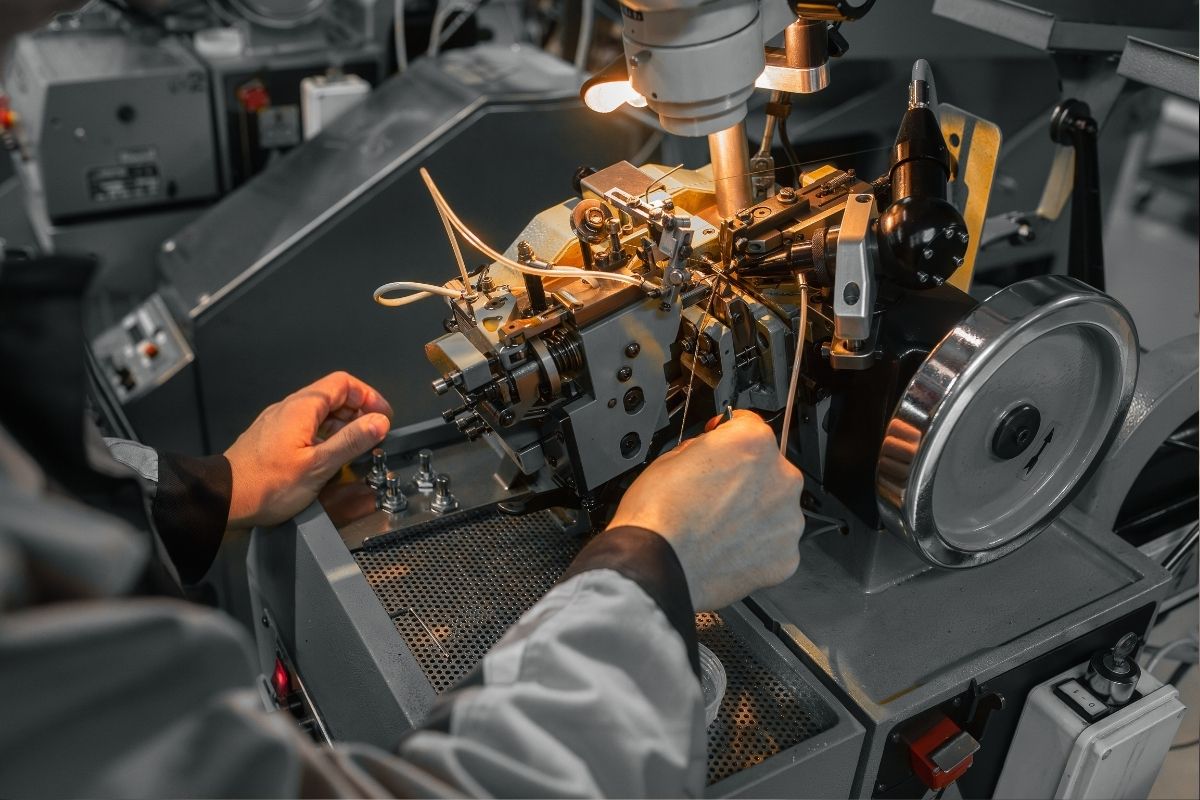
In the metal industry, implementation requires a data model capable of describing chemical and physical properties, batch characteristics, yield coefficients, and complex pricing structures. The weight recorded upon receipt, for example, must be linked to sampling, analysis, the supplier, contractual terms, inventory availability, and subsequent use in production. Only in this way can operational data properly support shipment settlement, planning, and cost control.
SAP services for the Smart Factory integrate ERP, MES, and production facilities
To link the plan to production, we integrate SAP with MES, weighing systems, spectrometers, PLCs, factory terminals, and specialized applications. The ERP system sends orders, planned materials, quantities, priorities, and quality constraints; from the shop floor, it receives progress reports, material consumption, cycle times, scrap, process parameters, and inspection results.
The integration must put the data into context. A temperature or quantity recorded by the machine becomes meaningful when it is linked to the correct phase, order, and batch. This makes it possible to trace the product’s history, update inventory levels, manage nonconformities, and compare planned and actual values.
In the steel sectorwe have developed workflows for casting traceability, finite-capacity scheduling with SAP PP/DS, production sequences, cutting sheets, rework, and quality certificates. The SAP-MES integration covers orders, inventory, and shipments, while the MES provides pick-up orders, quantities, and production progress times. In the aluminum sector, the model can include the recalculation of recipes based on scrap analysis, yields, and integration with laboratory instruments.
SAP Basis services manage infrastructure, performance, and security
The smooth operation of business processes depends on the stability of the technology landscape. Our SAP Basis team handles environment assessments, performance analysis, monitoring, technical archiving, EarlyWatch Alerts, patches, upgrades, roles, and authorizations. The service also includes support for the configuration and management of SAP BTP and the evaluation of cloud cost models.
In an industrial setting, a decline in performance can slow down inventory records, production confirmations, or data flows between ERP and MES systems. For this reason, technical monitoring must be aligned with operational priorities. The goal is to identify in advance conditions that could affect plant operations, logistics, or administrative shutdowns, without the collected data being limited to providing merely abstract value.
The management of roles and permissions follows the same logic. Operators, production managers, quality managers, maintenance managers, and administrative staff must have access to the necessary functions, while the system must ensure the separation of duties and the traceability of activities.
Application Maintenance Services support ongoing development after go-live
The go-live marks the end of the implementation project but marks the beginning of the longest phase of the application lifecycle. Our Application Maintenance Services handle incident reports, performance monitoring, updates, evolutionary support, and assistance for the IT team.
Support is organized according to agreed-upon needs and SLAs. Resolving the incident remains necessary, but each ticket may indicate a recurring problem, a configuration that is no longer adequate, or a process that needs to be reviewed. Analyzing the frequency, cause, and impact of reports allows you to turn the AMS into a tool for continuous improvement.
This approach is particularly useful in industrial settings, where a change to materials, processes, or interfaces can affect multiple areas. Before implementing such a change, it is necessary to assess its impact on production, quality, logistics, cost management, and field systems. The knowledge accumulated by the AMS team reduces analysis time and ensures consistency between specific interventions and the overall architecture.
International rollout and document management expand the model
When a corporate group operates in multiple countries, the SAP department must balance common standards with local requirements. In the SAP International Rollout , we deploy processes and configurations across different locations, handling customizations, compliance, testing, training, and go-live. To date , our experience includes projects completed in over 30 countries across five continents.
The central template defines shared data, controls, and processes; the localizations address the regulatory, tax, and operational requirements of each individual market. Testing in real-world scenarios ensures that the integration works properly before launch and that the local team is capable of managing day-to-day operations.
Let’s round out the scope with document management systems, designed to organize documents and build digital or hybrid workflows. Linking documents to SAP transactions allows you to associate orders, invoices, certificates, test reports, and technical documentation with the correct business objects, while applying versions, authorizations, and retention policies.
Our Experience in the Metal Industry: Tangible Results in the Field
The theory of digital transformation is validated only by the results achieved on the production lines. Over the years, we have partnered with various companies in the metallurgical and steel industries, translating the complexities of the factory floor into scalable digital solutions.
Three recent success stories serve as examples that demonstrate our practical and measurable approach.
ORI Martin Chooses SAP and the Cloud to Grow Its Business and Build Corporate Expertise
Acciai Vender Chooses SAP to Support Its Growth: One International Group, One System
With SAP and the cloud, Trafilspec ITS manages the complexity of custom manufacturing
A service cycle based on business results
Implementation, integration, Basis, AMS, rollout, and document management are not independent activities. They form a cycle in which the knowledge gathered during the project is preserved and used to manage the system over time.
We measure the effectiveness of SAP services using process-related metrics: system availability, response times, number and frequency of incidents, change lead times, adherence to schedule, yield, scrap, OEE, on-time delivery, and the time required to trace a batch. An SAP ecosystem generates value when this data can be reconstructed without manual reconciliations and traced back to the events that generated it.
In the metal industry, this continuity makes it possible to link variations in raw material quality to production decisions, cost variances, and market destination. It is on this relationship between technology, process, and outcome that we build our SAP services for the industry.
Would you like to learn how our hands-on experience can help your company simplify complexity and achieve new milestones?
¹ Source: ec.europa.eu/eurostat
